
Daniel Yiu
China’s Green Leap: Assessing 2025 Green Development Outcomes and the New Era of Sustainability Disclosure
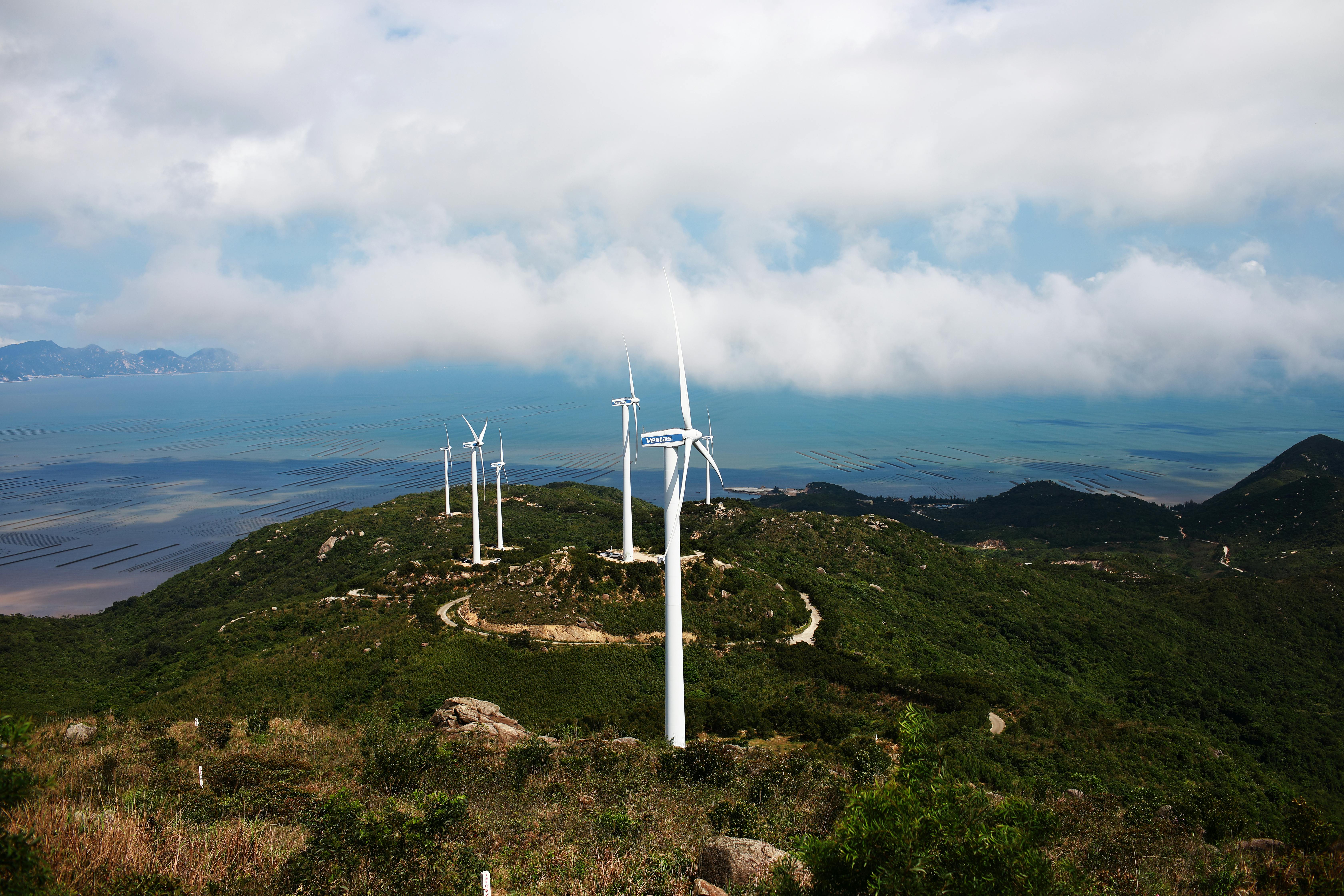
On March 5, 2026, the Chinese government unveiled the draft outline of the 15th Five-Year Plan (2026–2030). In this article, Future Horizons Institute Advisor Daniel Ka Chun Yiu explains the Plan’s key points and provides an assessment of current ESG trends in China, including the impressive increase in renewable energy capacity, the new sustainability disclosure regulations, and goals to accelerate energy transformation, technological breakthrough and green trade.
2025: Green Growth Delivers Strong Economic and Climate Outcomes
As 2025 marks the final year of China’s 14th Five-Year Plan for Economic and Social Development (2021-2025). Throughout the past five years, the country has demonstrated spectacular progress in aligning economic growth with environmental stewardship. Green technology has transitioned from an environmental tool to a dual-purpose engine capable of both reducing greenhouse gas emissions and supporting economic growth.
Clean energy now plays a key role in support China’s economic growth: clean energy contributed $2.1 trillion in 2025, accounting for 11.4% of China’s GDP, comparable to the economies of Brazil or Canada. Moreover, Climate-friendly products emerged as a primary export engine in 2025. According to data from the General Administration of Customs of the People’s Republic of China, the "New Three" industries—electric vehicles (EVs), photovoltaic (solar) products, and lithium-ion batteries—reached an export value of nearly 1.3 trillion yuan. This represents a 3.5-fold increase compared to 2020.
It is also worth noting that renewable energy installations have reached unprecedented heights. In 2025, new installations for wind and solar power exceeded 430 million kW. This surge brought the cumulative capacity of renewables to nearly half of the national total, officially surpassing coal power for the first time in history.
Finally, and not surprisingly, electric vehicles (EVs) have become the preferred choice for Chinese consumers. Data from the China Automobile Dealers Association shows that by December 2025, the retail penetration rate of EVs in the domestic passenger car market hit 59.1%, representing a significant 9.6 percentage point increase over the same period in the previous year.
Improved Transparency: Nearly Half of Chinese A-Share Listed Companies Released Sustainability Reports in 2024
Corporate sustainability reporting is on the rise. Nearly half of all listed companies in mainland China were producing sustainability-related reports. Specifically, 2,534 A-share listed companies disclosed sustainability reports for the 2024 fiscal year, achieving a disclosure rate of 47%, according to Industrial Securities.
Environmental data granularity is also improving. Approximately 1,500 companies—representing 28.91% of listed entities—reported specific greenhouse gas (GHG) emission data. These figures represent a year-on-year increase of 5.00 and 5.42 percentage points for sustainability reporting and GHG reporting, respectively. For companies subject to mandatory reporting, the disclosure rate for FY2024 sustainability reports reached a near-perfect 99.73%.
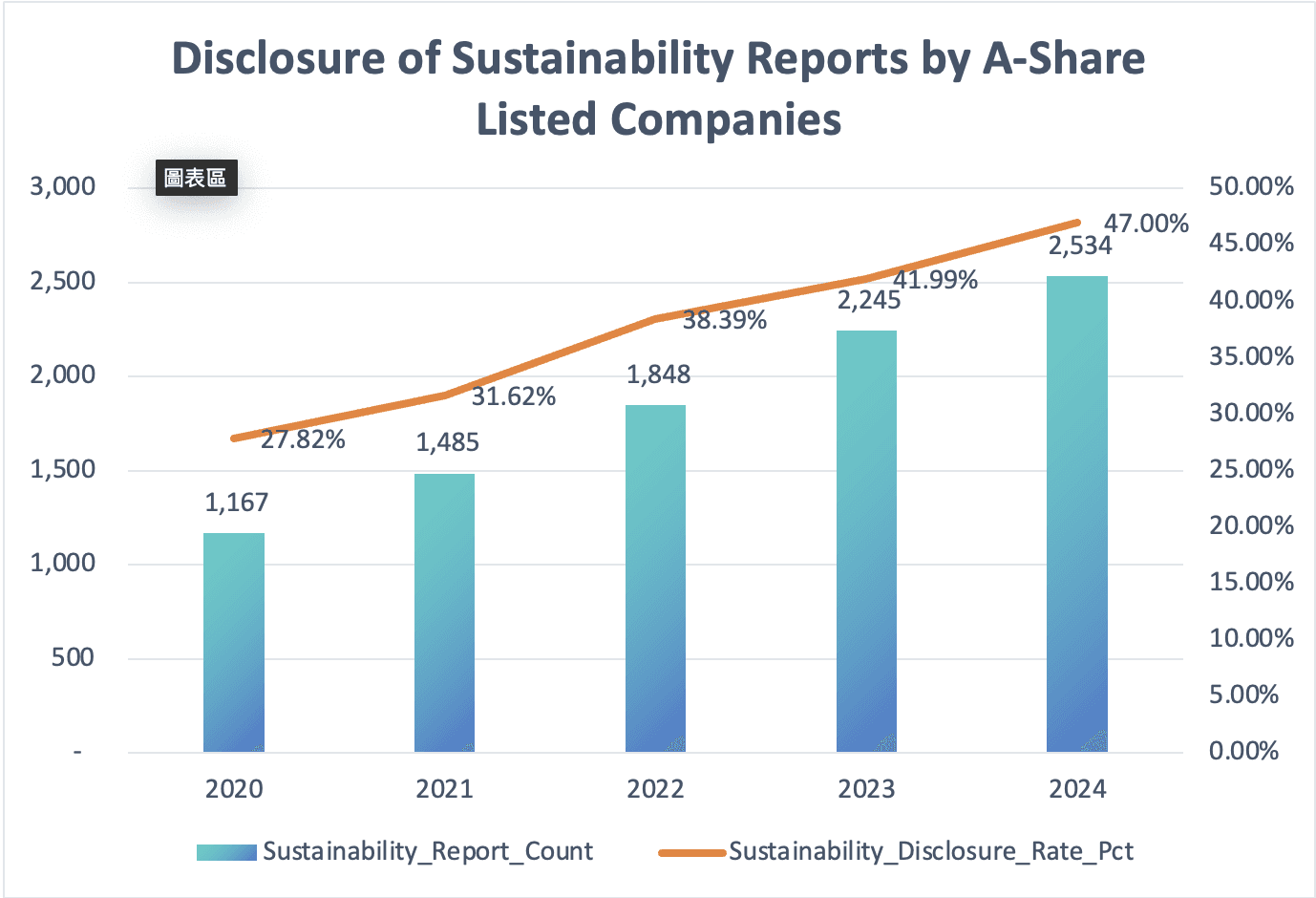
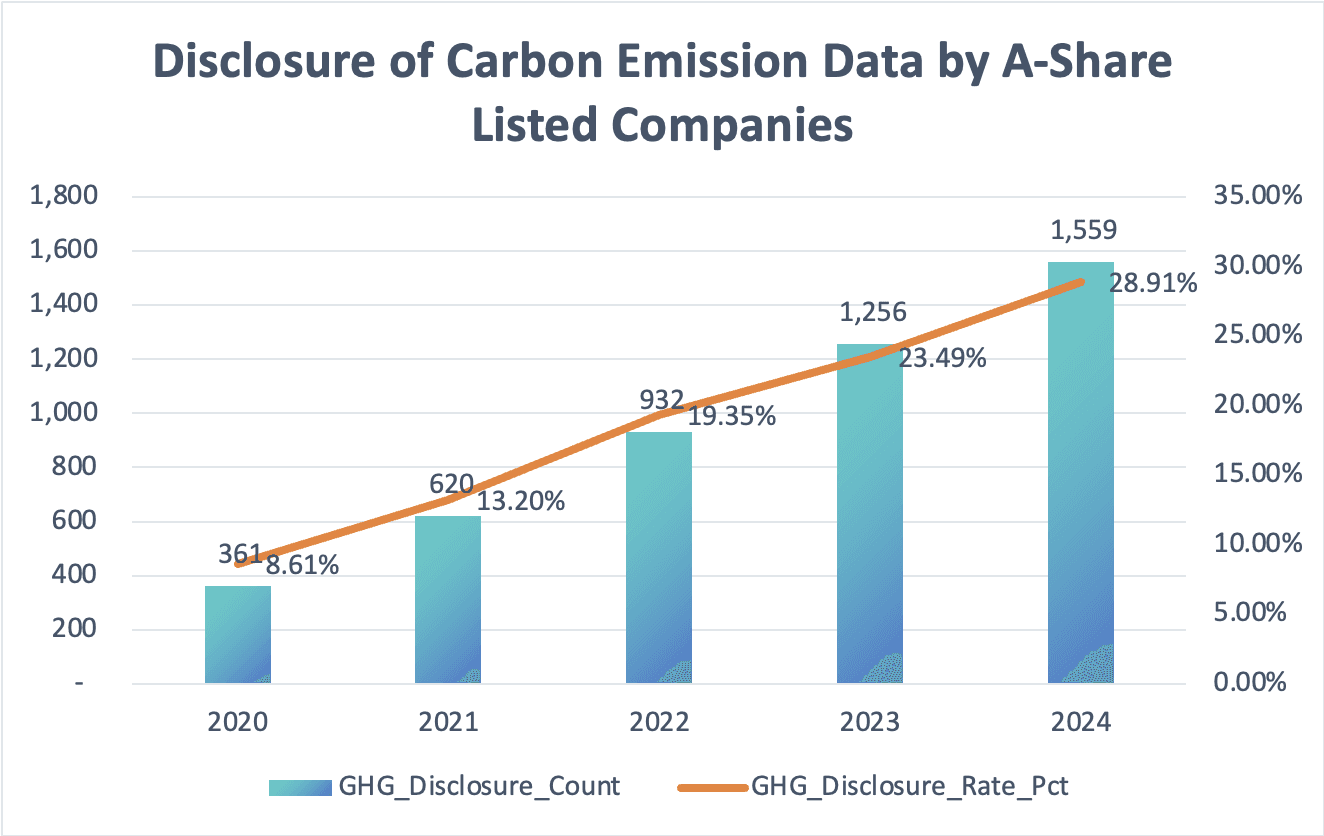
Data source: Quantdata, Wind, Industrial Securities Economics and Financial Research Institute.
Sustainability Disclosure: Enhanced Guidance and Climate Standards Drive High-Quality ESG Disclosures
Regulators intensified efforts to promote high-quality development of listed companies by enhancing corporate sustainability disclosure. Key regulatory milestones include:
• Sustainability Report Guidance (January 2026): The Shenzhen (SZSE), Shanghai (SSE), and Beijing (BSE) stock exchanges published updated guidance to refine the quality of disclosures. A significant addition in this update was the introduction of three sector-specific guidelines focusing on pollutant emissions, energy usage, and water usage.
• Corporate Sustainable Disclosure Standard No. 1 – Climate (December 2025): Released by the Ministry of Finance (MoF), this trial standard regulates climate-related disclosures. It is designed to regulate climate disclosure and align domestic reporting with international standards like IFRS S2.
Sustainability Reporting Guidance
To complement the Guidelines on Corporate Sustainability Reporting issued by stock exchanges, SZSE, SSE and BSE have published the updated Sustainability Report Guidance (the Guidance) in January 2026 to improve the sustainability disclosure quality of subject companies. In comparison to the last edition issued in 2025, the updated Guidance published three sector- specific disclosure guidance on pollutants emission, energy usage and water usage.
The guidance applies to constituent stocks of the SSE 180, STAR 50, SZSE 100, ChiNext Indices, as well as voluntary reporting entities. For companies required to conduct mandatory sustainability disclosure, the disclosure rate of their FY2024 sustainability reports reached 99.73%.
Reporting entities must prepare and disclose a sustainability report in accordance with the Guidelines within four months of the end of each fiscal year. The publication of the sustainability report must not precede the release of the company’s annual report.
The Guidelines on Corporate Sustainability Reporting require subject companies to publish FY 2025 sustainability reports before 30th April 2026. The upcoming sustainability reports are expected to provide investors with significantly more consistent, comparable, and decision-useful data than previous cycles.
Sustainability reports should be completed in accordance with the Guidelines. The reporting framework should ideally be structured around topic issues as the primary chapters.
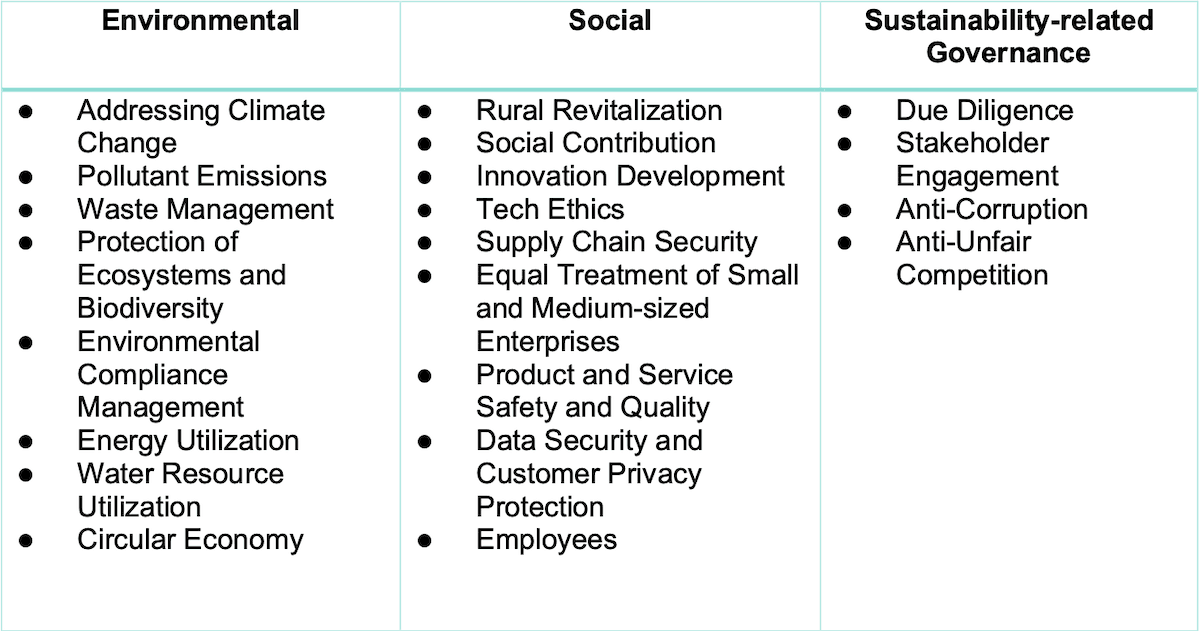
Figure 1: Topics that Reporting Entities can Disclose in accordance with Sustainability Report Guidance
For topics identified as having financial materiality (i.e an issue where the impact on net profit exceeds a 5% threshold) or impact materiality (determined through stakeholder interviews to assess actual or potential significant impacts on the economy, society, and the environment), disclosure must follow the four pillars of disclosure:
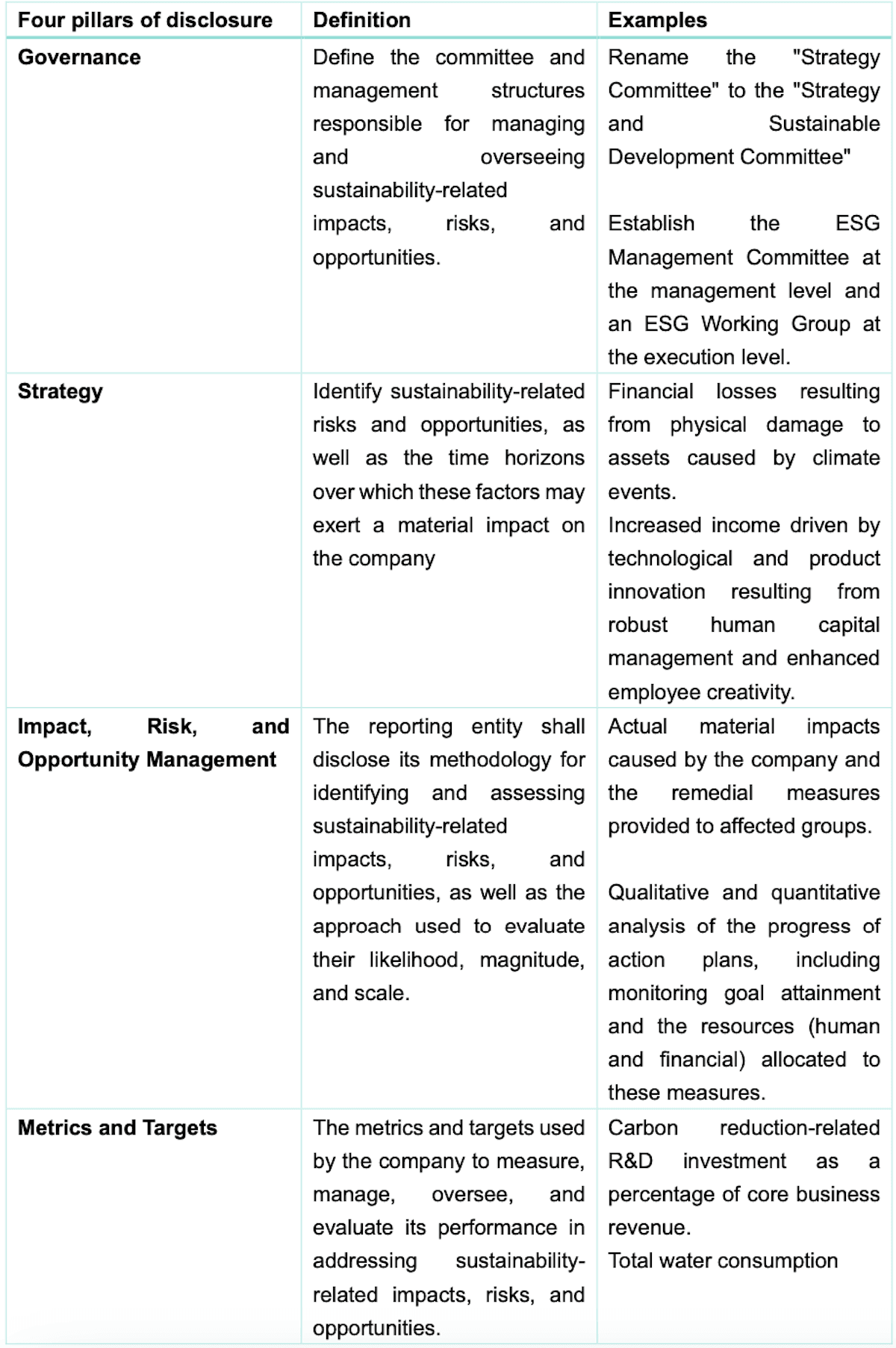
Figure 2: Four pillars of disclosure outlined in the Sustainability Report Guidance
Climate standards and sector-specific guidelines
Two important developments are worth highlighting. First, in December 2025, the Ministry of Finance (MoF) released the Corporate Sustainable Disclosure Standard No. 1 – Climate (Trial) (the "Climate Standard"). This framework aims to standardize corporate climate reporting, curb greenwashing, and provide investors with consistent, comparable data to facilitate transition financing and climate change mitigation.
Second, the regulator stipulates that the Basic Standards and Climate Standards for corporate sustainability will be fully rolled out by 2027, with a comprehensive, unified national sustainability disclosure system established by 2030. Following the release of the Climate Standards, the MoF is now developing sector-specific application guidelines for high-impact industries—including power, steel, coal, petroleum, fertilizer, aluminum, hydrogen, cement, and automotive, forming a comprehensive sectoral application framework comprising 'Basic Standards + Specific Standards + Sectoral Application Guidelines.'
So far there are no stipulated reporting periods for the Climate Standard. Although it currently remains a voluntary framework, the MoF is executing a strategic "phased expansion" roadmap designed to transition the market from qualitative to quantitative disclosure and from voluntary to mandatory compliance, systematically scaling its reach from large-cap listed entities to the broader SME and non-listed corporate landscape.
The Climate Standard is closely aligned with the IFRS S2 framework adopts the four-pillar structure of Governance, Strategy, Risk and Opportunity Management, and Metrics and Targets, requiring entities to disclose both financial materiality (climate-related physical and transition risk exposures) and impact materiality (Scope 1, 2, and 3 emissions) despite "double materiality" not being explicitly stated in the document.
Future Outlook: Advancing “Beautiful China”
As China approaches its 2030 carbon peak, the 15th Five-Year Plan (2026–2030) —reaffirms green development as a strategic priority through a comprehensive transition toward "Building a Beautiful China".
On March 5, 2026, the Chinese government unveiled the draft outline of the 15th Five-Year Plan (2026–2030). The Plan pledges a 17% reduction in carbon emissions per unit GDP over the next five years——a slight moderation compared to the 18% reduction goal mandated in the previous Five- Year Plan. Besides, the 15th Five-Year Plan include the following key points:
Continue to advance the transition to pollution prevention and control and the optimization of ecosystems. Implement actions for the comprehensive management of solid waste. Strengthen environmental risk prevention and control, and further promote the treatment of new pollutants.
Accelerate the development of a new energy system. Continuously increase the proportion of new energy supply and promote the safe, reliable, and orderly substitution of fossil fuels.
Actively and steadily promote and achieve carbon peaking. Implement a dual control system for both the total amount and intensity of carbon emissions. Deepen the implementation of energy-saving and carbon- reduction transformations. Promote the peaking of coal and petroleum consumption.
Accelerate the formation of green production and lifestyles. Promote green and low-carbon transformation in key areas such as industrial, urban and rural construction, transportation, and energy.
Despite this momentum, China faces structural hurdles exacerbated by geopolitical complexity and technological shifts. This includes coal consumption, which remains high. Coal accounts for over 50% of China’s total energy consumption. It is projected that energy and resource demand will maintain steady growth through 2035. Moreover, solid waste volumes are expected to rise: An official from the Ministry of Ecology and Environment previously estimated that by 2030, retired photovoltaic modules will reach approximately 1.5 to 2 million tons. Additionally, waste wind turbine blades will total around 500,000 tons, and decommissioned power batteries will reach approximately 1 million tons.
Seize the Day, Seize the Hour
Overcoming these structural hurdles requires a steadfast commitment to policy stability, technological innovation, and international cooperation, rather than retreating to carbon-intensive growth or sacrificing environmental integrity for short-term energy security.
The future depends on our current action, and erratic policies hurt the citizens, nations and the planet. As chairman Mao once said: “Ten thousand years are too long; seize the day, seize the hour".