Reza Lahidji, Claudia Melim-McLeod
The U.S. operation in Venezuela and the destruction of international law: the time to respond is now
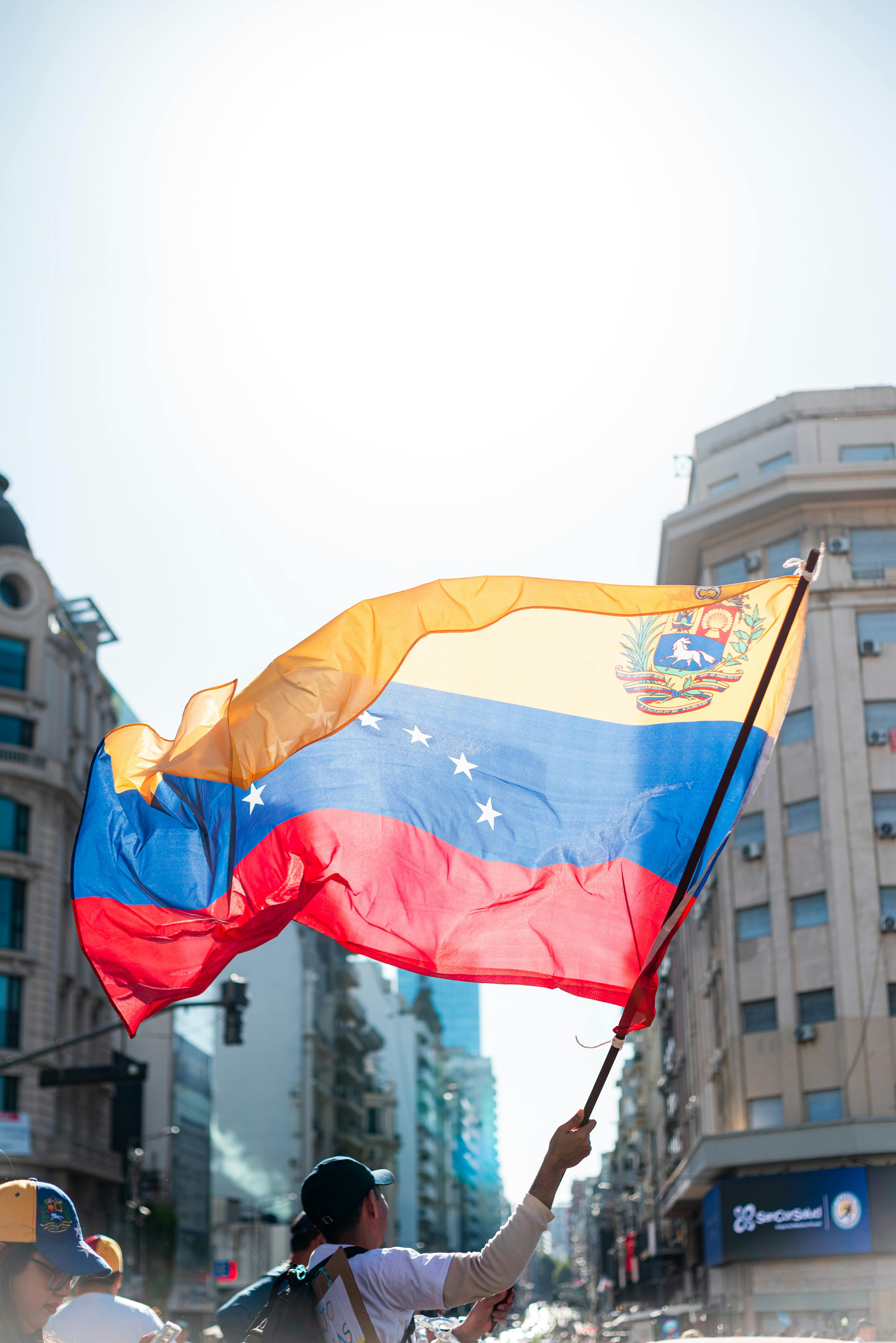
In this piece, Future Horizons Institute Director Claudia Melim-McLeod and Board Chair Reza Lahidji discuss the recent U.S. intervention in Venezuela and call for the international community to stand united in the defense of international law.
The U.S. operation to abduct Nicolas Maduro, the head of the Venezuelan state, has generated a shock wave across the world. Yet as is well known, there is nothing new about U.S. interference abroad, military or otherwise, including in blatant violation of international law.
Same old U.S. interventionism?
The operation in Venezuela violates international law on two key fronts: the use of force against another state outside of a situation of self-defence (i.e. response to a prior attack) is prohibited by the U.N. Charter; and heads of state have legal immunity and cannot be indicted in front of domestic criminal courts in other states.
The U.S. government’s justification against this dual proscription is that it does not recognise Maduro as Venezuela’s legitimate head of state and claims of self-defense made in relation to drug trafficking. Maduro is charged with “narco-terrorism conspiracy”, cocaine importation, and weapons-related conspiracy. The overall argument is considered as extremely weak by most experts in international law. A similar case was made by the U.S. government in 1989, after it invaded Panama, seized its leader Manuel Noriega and indicted him for drug and money laundering offences in front of a U.S. court. These actions were denounced as “a flagrant violation of international law” by the U.N. General Assembly’s resolution 44/240.
The U.S. administration itself does not seem entirely convinced by these arguments and very rapidly shifted to a more convincing explanation for its attack, namely to gain control of Venezuela’s considerable mineral resources. Donald Trump had no qualms saying very clearly that he would take control of oil proceeds to “benefit the people of Venezuela and the United States.” Other declarations by U.S. officials designated Venezuela’s decision to nationalise its oil resources in 1976 and expropriations of U.S. oil majors participations in oil production ventures in 2006-2007 as the key justification for the intervention.
Engineering regime change for the sole purpose of controlling a sovereign country’s resources can be considered a U.S. tradition of the past 100 years. This includes, for instance, the 1953 coup piloted by the CIA against Mossadegh, Iran's democratically elected head of government, whose audacity had precisely included nationalising the country's oil resources. These interventions, financed by American taxpayers, brought huge dividends to U.S. private interests, particularly those connected to the powerful oil and gas and military industrial lobbies. The U.S.-led invasion to remove the Taliban in gas pipeline-strategic Afghanistan (2001) and to topple Saddam Hussein in oil-rich Iraq (2003) paved the way for defence contracts estimated at USD 14 trillion, including at least USD 8 billion to the companies that had most contributed to the presidential campaigns of George W. Bush.
In conformity with the Monroe doctrine, Latin America has been a primary target of U.S. interference: the region holds the record of U.S. politically motivated actions, covert or military, during the Cold War, including in Guatemala (1954), Cuba (1961), Dominican Republic (1965), Chile (1973), Grenada (1983), and Panama (1989). Democratically elected governments were also toppled by military forces in Brazil (1964) and Argentina (1976). While the total number of victims of human rights violations under U.S.-supported military regimes in Argentina, Brazil, Chile and the sub-regional ‘Operation Condor’ is not known, official sources and academic estimates place the number of those killed and ‘disappeared’ between 60,000 and 80,000, with over 400,000 victims of torture region-wide, not counting around 500 stolen newborns and children in Argentina alone. (See references)
A new strategy
What is new is that while past U.S. governments carried out such illegal acts under the veil of covert operations or the pretext of defending ‘democracy’ and ‘freedom’, Donald Trump has done away with such niceties. The disregard for international law and a renewed focus on the so-called ‘Western Hemisphere’ with the objective of securing resources are even clearly spelled out in the U.S. National Security Strategy released in November 2025.
On multilateral organizations: “The United States will put our own interests first and, in our relations with other nations, encourage them to prioritize their own interests as well. We stand for the sovereign rights of nations, against the sovereignty-sapping incursions of the most intrusive transnational organizations […].”
On minerals and oil: “As Alexander Hamilton argued in our republic’s earliest days, the United States must never be dependent on any outside power for core components—from raw materials to parts to finished products— necessary to the nation’s defense or economy. […] This will require expanding American access to critical minerals and materials while countering predatory economic practices. […] Restoring American energy dominance (in oil, gas, coal, and nuclear) and reshoring the necessary key energy components is a top strategic priority.”
On the ‘Western Hemisphere’: “We want to ensure that the Western Hemisphere remains reasonably stable and well-governed enough to prevent and discourage mass migration to the United States; we want a Hemisphere whose governments cooperate with us against narco-terrorists, cartels, and other transnational criminal organizations; we want a Hemisphere that remains free of hostile foreign incursion or ownership of key assets, and that supports critical supply chains; and we want to ensure our continued access to key strategic locations. In other words, we will assert and enforce a ‘Trump Corollary’ to the Monroe Doctrine.”
And finally, on abandoning democracy as a justification for interventions: “U.S. policy will be realistic about what is possible and desirable to seek in its dealings with other nations. We seek good relations and peaceful commercial relations with the nations of the world without imposing on them democratic or other social change that differs widely from their traditions and histories.”
Every aspect of the operation in Venezuela conforms to this Strategy, including maintaining in place Maduro’s regime, in the hands of his vice president and former Minister of Petroleum Delcy Rodríguez.
A fatal blow to international law?
There is, however, more to the operation. Nicolas Maduro and his government had indeed clearly indicated that they were ready to grant every advantage that the U.S. government was asking for, including Maduro’s own dismissal, through a negotiated process. It appears that Donald Trump and his administration wanted more – they wanted to deliver a message.
The attack itself conveys the message: after months of careful planning, the United States abducted Maduro on the exact date of the sixth anniversary of the assassination of Ghassem Soleimani, Commander of the Quds Force and one of the most influential figures of the Islamic Republic of Iran, by a U.S. drone attack during the first Trump presidency.
In the immediate aftermath of the attack, Donald Trump and other U.S. officials repeatedly declared that the United States had the intention of appropriating Greenland, including through the use of military force.
Through the operation in Venezuela, Donald Trump has therefore told foes, friends, and the entire world that the old system of international relations is bygone, and this is the way things are going to work from now on.
Previous U.S. administrations maintained the appearances of respect for international law and the multilateral system because they believed that most of the time, these did serve the interests of their country.
The Trump administration, on the contrary, believes that the system of international relations, norms and institutions is altogether detrimental to the interests of the US and must be brought down. Under Trump, the U.S. government has therefore systematically attempted to destroy every component of the international system, from climate negotiations and the management of epidemics to development aid and trade rules.
The operation in Venezuela is its latest blow to the international peace and security system. It is a blow that might prove fatal after two years of genocide in Gaza, semi-permanent U.S.-backed Israeli aggression against other countries of the Middle East, and four years of Russian war against Ukraine.
The discredit of the U.N. Security Council and the normalisation of total disregard for the U.N. Charter, cumulated with the numerous other attacks that the international system has experienced in recent years, are likely to lead to its general collapse in the short term if other countries do not articulate a strong and coordinated response.
The response
The overwhelming majority of the world's population and its governments have opposed the lawless actions by the United States.
But official responses have been mostly dictated by narrow and short term interest considerations. The attitude of most European countries, particularly France, Germany, Italy and the UK, as well as the European Commission, have been particularly timid. In fact, only when Trump openly said the U.S. has to “have Greenland” did some Europeans issued a less complacent joint statement.
By focusing on their narrow interests and always seeking to appease Donald Trump in the name of political realism, European countries have ignored that international law and multilateral institutions are a global public good. They have, in fact, actively contributed to its destruction.
In this context, the recent joint statement by Spain, Brazil, Chile, Colombia, Mexico and Uruguay rejecting the US military operations in Venezuela, warning against an appropriation of its natural resources, and calling for regional unity beyond political differences are a glimmer of hope, a lesson of courage and solidarity that needs to be heard and extended.
All countries must unite to push back, not only in words but also in acts, against those that are bringing about a world of chaos and brute force.
This can start in Europe, and Greenland still provides an opportunity. As Camille Grande of the European Council on Foreign Relations told the BBC, "Had there been a common statement from all 27 EU partners, plus Nato ally the UK, in support of Danish sovereignty, that would have sent a powerful message to Washington”.
But what the world needs now goes beyond the defence of particular national and regional interests. It needs principled action by the largest possible coalition of countries to systematically defend international law and institutions and punish any violation with concrete measures. And it needs rapid and concerted progress towards a new multilateral regime that corrects the fatal weaknesses of the previous one. It is time to take on Donald Trump’s challenge.
About the authors:
Reza Lahidji is an economist specialised in the evaluation of government policies, with a particular focus on access to justice, fundamental rights, and the rule of law: He is the Chair of the Future Horizons Institute Board.
Claudia de Andrade Melim-McLeod is the Director of Future Horizons Institute. With a background in international development and expertise in political economy analyses, governance, and climate change, Claudia has over 25 years of experience in international organizations, research institutions and NGOs.
Selected sources
Biblioteca Nacional de Chile – Informe Rettig (Memoria Chilena). https://www.memoriachilena.gob.cl/602/w3-article-94640.html
CIA FOIA – Argentina Declassification Project: The 'Dirty War' (1976–83). https://www.cia.gov/readingroom/collection/argentina-declassification-project-dirty-war-1976-83
Henriksen. T. H. – America’s Wars: Interventions, Regime Change, and Insurgencies After the Cold War (2017)
Instituto Nacional de Derechos Humanos (Chile) – Informe de la Comisión Nacional de Verdad y Reconciliación (Informe Rettig). http://bibliotecadigital.indh.cl/handle/123456789/170
Kertesz, J. (2024). The right to truth in Brazil: A review of challenges and progress. Global Campus Human Rights Journal, 8, 155-170. https://www.gchrj.net/wp-content/uploads/2025/07/2.GCHRJ8_.2_Kertesz.pdf
Lessa, F. (2018). Operation Condor on Trial: Justice for Transnational Human Rights Crimes in South America. Journal of Latin American Studies. https://www.cambridge.org/core/journals/journal-of-latin-american-studies/article/abs/operation-condor-on-trial-justice-for-transnational-human-rights-crimes-in-south-america/C2A765BAB0E45A1260053E1E8DC0AE82
Lessa, F., & Balardini, L. (2024). No Safe Haven: Operation Condor and Transnational Repression in South America. International Studies Quarterly. https://academic.oup.com/isq/article/68/2/sqae035/7637878
National Security Archive (GWU) – Brazil Truth Commission Releases Report (EBB No. 496). https://nsarchive2.gwu.edu/NSAEBB/NSAEBB496/
Omega Research Foundation – Tools of Torture and Repression in South America: Use, manufacture and trade. https://omegaresearchfoundation.org/reports/tools-of-torture-and-repression-in-south-america-use-manufacture-and-trade/
Poznansky. M. – In the Shadow of International Law: Secrecy and Regime Change in the Postwar World (Oxford, 2020)
Poznansky, M. – The United Nations and the Accidental Rise of Covert Intervention (Lawfare, 2023)
UN OHCHR – Database on the Condor Trials (1976–2022). https://www.ohchr.org/sites/default/files/documents/issues/disappearances/cfi/ucj/subm-research-wg-cso-plan-condor-en.pdf
Westad, O. A. – The Global Cold War: Third World Interventions and the Making of Our Times (Cambridge University Press, 2005)